
- Home
- Services
- Piping & Process Systems
- GRP, FRP and GRE piping
Composite piping
GRP, FRP and GRE piping
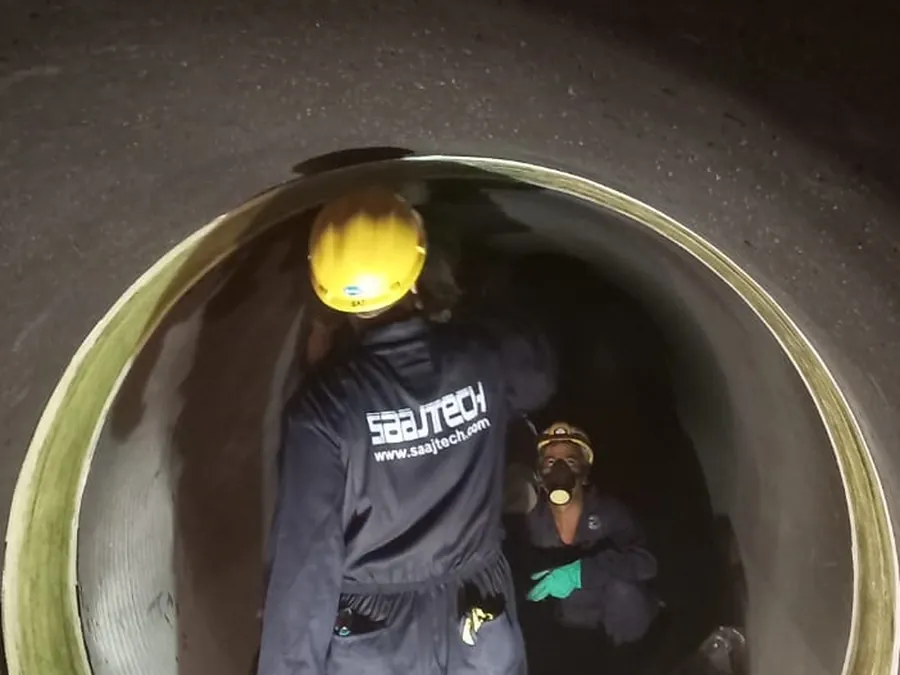
Glass reinforced composite pipework to DN1200 — laminated, bonded and tested on seawater duty where steel does not last.
Seawater corrodes steel from the day it is commissioned. Glass reinforced composite does not corrode at all, which is why intake lines, cooling water headers and effluent systems across the Gulf are built from it. The trade-off is that composite pipe is only as good as the jointing, and jointing is a wet lay-up process carried out by hand.
The three materials
- GRP — glass reinforced polyester. The general-purpose composite for water, seawater and drainage.
- GRE — glass reinforced epoxy. Higher temperature and pressure capability, used on process and firewater duty.
- FRP — the generic term, and in practice the vinyl ester systems used for aggressive chemical service.
Jointing
Laminated joints
Successive layers of glass reinforcement and resin are applied over a prepared joint to a laminate schedule that specifies ply sequence, overlap and total thickness. Resin ratio, cure temperature and laminate build are controlled and recorded. This is the method for large diameters and for site modifications.
Adhesive bonded joints
Factory-tapered spigot and socket joints bonded with a two-part adhesive, heat cured where the system requires it. Faster than lamination and the standard method on GRE systems supplied with matched fittings.
What this covers
- Seawater intake and discharge headers to DN1200
- Cooling water distribution on power and desalination plant
- Effluent, brine and chemical drainage systems
- Repair and modification of existing composite systems
- Tie-ins between composite and metallic or thermoplastic pipework
- Hydrostatic testing and documented test packs
Standards we work to
- ISO 14692
- ASTM D2996
- ASTM D5685
- BS 4994
- AWWA C950
- ASTM D3839
Common questions
What clients ask before awarding
What is the largest diameter you have worked on?
What is the difference between GRP, GRE and FRP?
Can you repair existing composite pipework?
How do you control lamination quality in Bahrain’s climate?
Send us the drawings. We will tell you what it takes.
BOQ, isometrics, specifications or a full tender package. Acknowledged within one working day, with the machine schedule and programme in the offer.